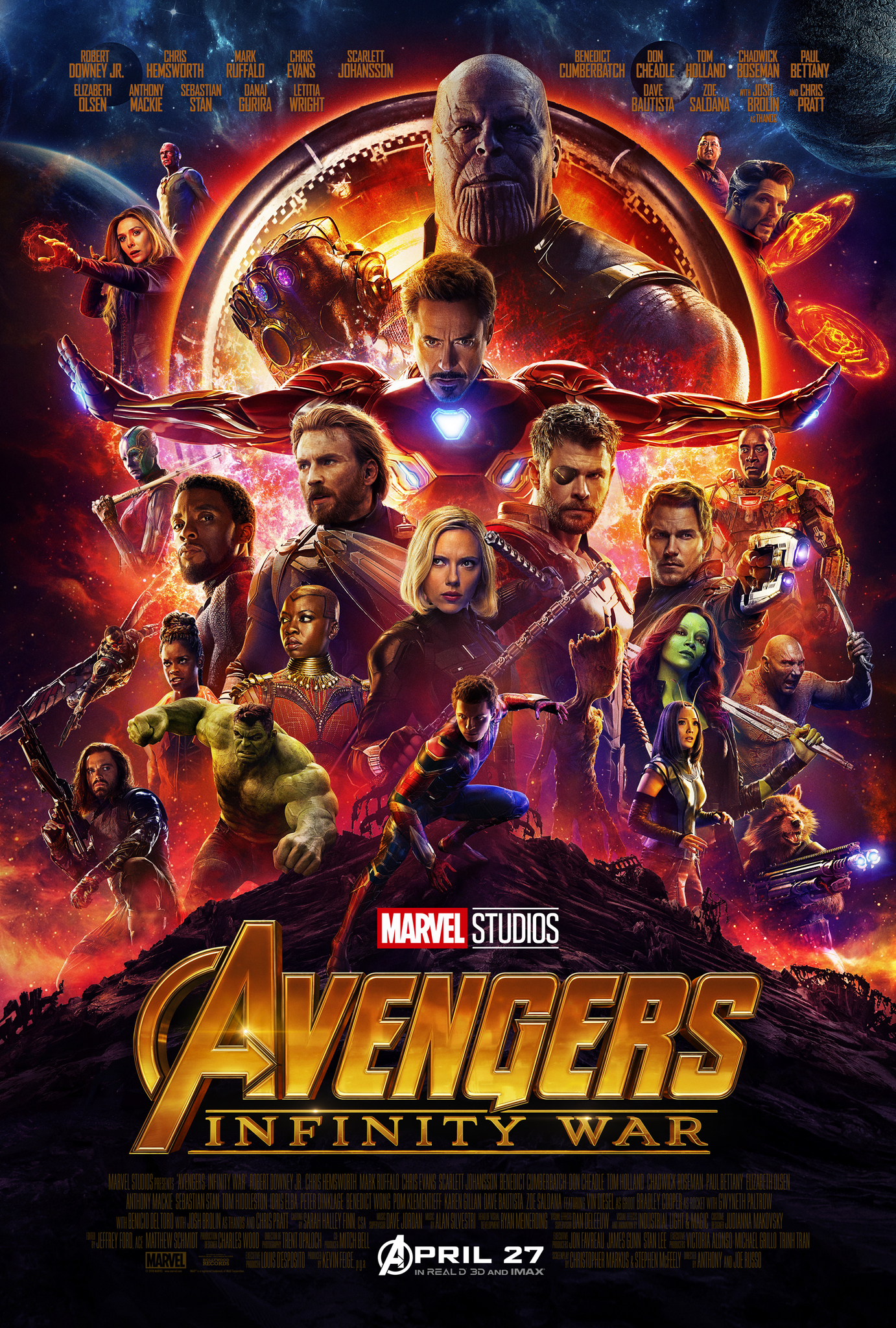
Avengers: Infinity War (2018)
Synopsis: As the Avengers and their allies have continued to protect the world from threats too large for any one hero to handle, a new danger has emerged from the cosmic shadows: Thanos. A despot of intergalactic infamy, his goal is to collect all six Infinity Stones, artifacts of unimaginable power, and use them to inflict his twisted will on all of reality. Everything the Avengers have fought for has led up to this moment - the fate of Earth and existence itself has never been more uncertain.
Download Avengers: Infinity War (2018)
Comprehensive Overview & Cinematic Analysis
Released in April 2018, Avengers: Infinity War stands as a defining achievement in modern blockbuster filmmaking. Directed by Anthony and Joe Russo, with a brilliant screenplay by Christopher Markus and Stephen McFeely, the film served as the culmination of ten years of interconnected storytelling across the Marvel Cinematic Universe (MCU). Bringing together dozens of beloved characters introduced across nearly twenty standalone films, Infinity War accomplished a feat previously thought impossible in Hollywood: a massive, sprawling crossover that maintained emotional depth, structural coherence, and relentless narrative momentum.
The cultural impact of Infinity War was instantaneous and profound. Fans lined up around the block for midnight screenings, eager to witness how Earth's mightiest heroes would fare against their ultimate adversary. Rather than focusing solely on spectacle, the directors anchored the cosmic stakes in genuine character conflict, sacrifice, and dread. The film's willingness to subvert conventional Hollywood tropes and deliver a genuinely shocking conclusion reshaped the cinematic landscape and left audiences eagerly anticipating its successor, Avengers: Endgame.
The narrative begins immediately following the events of Thor: Ragnarok. Thanos and his formidable vanguard—the Black Order—intercept the refugee ship carrying the surviving Asgardians. Having already secured the Power Stone from Xandar, Thanos easily overpowers Thor, subdues Hulk, and slays Loki, acquiring the Space Stone from the Tesseract. His ultimate ambition is singular and uncompromising: to gather all six Infinity Stones (Space, Reality, Power, Mind, Time, and Soul) so that he can snap his fingers and eradicate half of all life in the universe, believing this brutal measure will solve overpopulation and resource scarcity.
As Thanos sets his sights on Earth to claim the remaining stones, the fractured Avengers must find a way to reunite. Tony Stark and Bruce Banner cross paths with Doctor Strange and Wong, while Captain America, Black Widow, and Falcon operate from the shadows following the fallout of Captain America: Civil War. Simultaneously, Thor teams up with the Guardians of the Galaxy—Star-Lord, Gamora, Groot, Rocket, Drax, and Mantis—to forge a mythical weapon capable of piercing Thanos's defenses, leading to multiple high-stakes fronts across the cosmos and Wakanda.
A primary reason for the overwhelming success of Avengers: Infinity War is its handling of the villain. Played through groundbreaking performance-capture technology by Josh Brolin, Thanos is far from a one-dimensional conqueror. He is portrayed with a quiet, terrifying conviction, genuinely viewing himself as a misunderstood savior rather than a monster. His complex relationship with his adopted daughter, Gamora, introduces layers of tragic emotional weight, proving that even a tyrant capable of galactic genocide feels grief and affection.
Brolin's commanding presence, combined with intricate CGI that rendered every subtle nuance of his facial expressions, made Thanos one of the most memorable antagonists in cinematic history. His philosophical justification, cold calculation, and physical dominance forced every single superhero to push past their absolute limits, redefining the threat level in superhero cinema.
One of the most thrilling aspects of Infinity War is watching disparate characters from different corners of the MCU meet and interact for the very first time. The witty friction between Tony Stark and Doctor Strange over leadership styles, the comedic rivalry between Thor and Star-Lord regarding machismo and leadership, and the emotional reunion between Steve Rogers and Bucky Barnes in Wakanda provide rich texture to the narrative.
The Russo brothers expertly balance screen time among an enormous roster, ensuring that heavyweights like Iron Man, Thor, Captain America, and Thanos receive substantial arcs while supporting players like Spider-Man, Black Panther, and Scarlet Witch experience pivotal moments of growth and heartbreak.
At its thematic core, Infinity War explores the weight of difficult choices and the harsh reality that heroes cannot always win through sheer willpower. Throughout the film, characters are repeatedly forced to choose between the life of an individual and the safety of the universe. Vision willingly offers his life to destroy the Mind Stone, Gamora begs Peter Quill to kill her to protect the location of the Soul Stone, and Doctor Strange ultimately trades the Time Stone to save Tony Stark's life.
The pervasive theme of inevitability is amplified by Alan Silvestri’s stirring musical score. Silvestri blends old motifs with dark, thunderous new themes that signal an overwhelming sense of doom. The contrast between hopeful heroics and insurmountable odds gives the film its unique tragic beauty.
Avengers: Infinity War shattered global box office records, grossing over two billion dollars worldwide and cementing its place as a pop culture phenomenon. Its daring narrative risk-taking and unforgettable ending changed expectations for franchise storytelling. For fans wishing to experience or revisit this masterclass in pacing, action, and emotion, downloading and streaming options provide high-definition access to a milestone in film history.